
Mental health routine for professionals: 2026 guide
- Bright Life Family Centre

- Jun 11
- 8 min read

A professional mental health routine is a structured set of daily habits designed to protect psychological wellbeing, sustain focus, and build resilience under occupational pressure. Professionals who build mental health routine practices into their working day report measurable gains in concentration, emotional regulation, and stress tolerance. The clinical term for this approach is psychological self-regulation, and it draws on sleep science, mindfulness, physical activity, and digital wellness. This guide covers every component you need, the practical steps to personalise your plan, and the common traps that derail even the most motivated professionals.
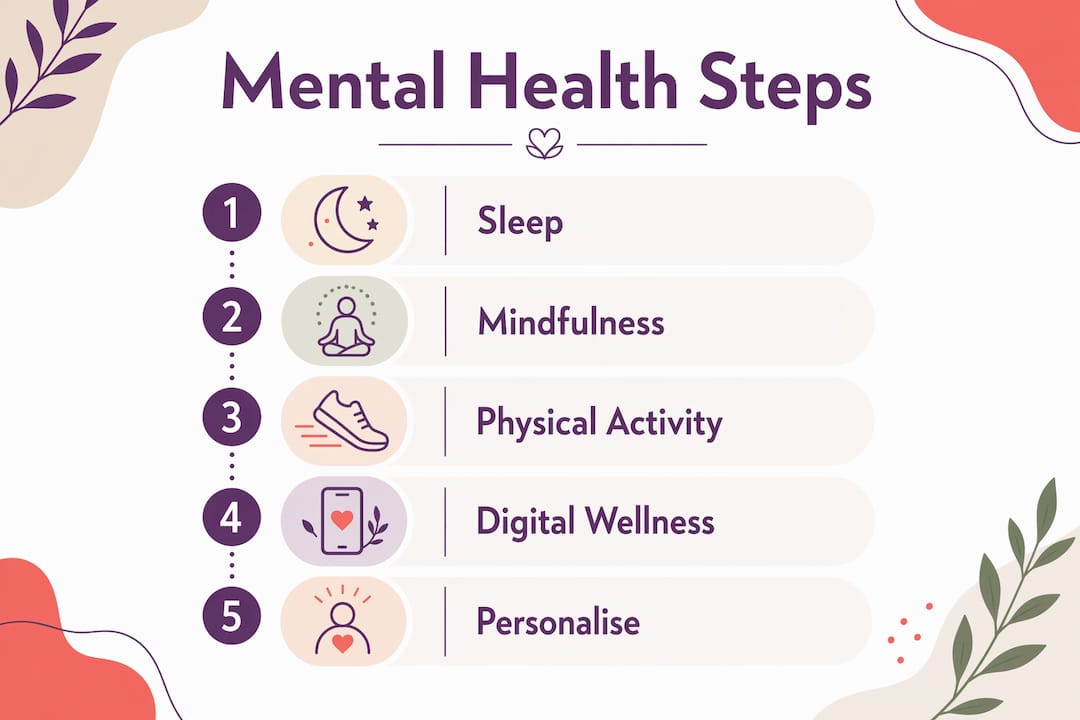
What components build a mental health routine for professionals?
Sleep is the single most underrated professional performance tool. Consistent sleep of 7–9 hours per night, combined with a steady wake time, regulates your circadian rhythm and directly reduces vulnerability to anxiety and depression. Skipping this foundation makes every other mental health strategy harder to sustain.
Mindfulness is the second pillar, and it is widely misunderstood. Mindfulness is not about clearing the mind but about noticing thoughts with curiosity and compassion. That distinction matters because it removes the pressure to “do it perfectly,” which is exactly the trap most professionals fall into. Even three to five minutes of deliberate breath awareness during a lunch break interrupts cycles of worry and restores clarity.
Physical activity is the third non-negotiable. Adults should aim for 2.5 hours of moderate exercise weekly, which breaks down to 20–30 minutes daily. That is a brisk walk, a lunchtime cycle, or a short home workout. The mental health return on that investment is well-documented, including reduced cortisol, improved mood, and sharper cognitive function.

Digital wellness is the fourth component, and the one most professionals ignore. Avoiding phone use for 30 minutes after waking and reducing passive scrolling prevents the digital overwhelm linked to heightened anxiety. If you check email before your feet hit the floor, you have already handed your nervous system to someone else’s agenda.
Component | Recommended Time or Effort | Key Benefit |
Sleep | 7–9 hours nightly, fixed wake time | Regulates mood and resilience |
Mindfulness | 3–5 minutes, twice daily | Reduces worry cycles, improves clarity |
Physical activity | 20–30 minutes daily | Lowers cortisol, sharpens focus |
Digital boundaries | 30-minute phone delay on waking | Prevents anxiety from digital overload |
Unstructured time | 15–30 minutes daily, screen-free | Restores mental energy |
Pro Tip: Set your phone to “Do Not Disturb” until after your morning routine is complete. This single boundary protects the neurological window when your brain is most receptive to calm.
How can professionals develop and personalise their routines?
The most effective method for building new habits is anchoring them to existing ones. Habit stacking means attaching a new behaviour to something you already do reliably, such as practising three minutes of mindfulness immediately after making your morning coffee. This approach works because it reduces the cognitive effort required to remember a new habit and avoids triggering resistance from an already-stretched nervous system.
Start with two or three habits, not ten. Mental health routines benefit from trial and error because what feels sustainable for one professional may feel burdensome for another. The goal is calm and manageability, not another productivity metric to optimise. Give each new habit two weeks before judging its value.
Here is a practical framework to begin with:
Morning (10 minutes total). Delay phone use for 30 minutes. Spend three minutes on slow, deliberate breathing. Drink a glass of water before coffee.
Midday (15 minutes total). Take a 10-minute walk away from your desk. Eat lunch without a screen. Notice one thing you have completed well.
Evening (20 minutes total). Set a consistent wind-down time. Write two or three sentences in a journal about the day. Avoid screens for 30 minutes before bed.
This structure is a starting point, not a prescription. Swap elements freely until the routine feels natural rather than forced. If journalling feels tedious, replace it with five minutes of reading fiction. If a lunchtime walk is impossible on Tuesdays, move it to a short stretch at your desk. The overcoming anxiety guide from Brightlifefamilycentre offers additional mindfulness techniques that slot neatly into these time blocks.
Pro Tip: Never aim for a perfect routine on day one. A two-minute breathing practice done consistently beats a 45-minute wellness programme abandoned after a week.
What challenges do professionals face when building wellness habits?
Burnout is the most common barrier, and it creates a cruel paradox. When you most need a mental health routine, burnout makes it hardest to start one. The reason is physiological: a dysregulated nervous system resists new cognitive demands, including the demand to “be well.” Trying to journal or meditate when you are in a state of overwhelm often fails because the body has not yet been calmed.
The solution is physiological grounding first. Breathing techniques such as 4–6 second sequences calm the nervous system and make cognitive mental health work far more effective. Before you open your journal or attempt a mindfulness session, spend two minutes on slow exhales. This is not optional preparation. It is the mechanism that makes everything else work.
Perfectionism is the second major obstacle. Professionals trained to perform at high standards often apply the same all-or-nothing thinking to their wellness routines. A missed day becomes evidence that the routine has failed. That interpretation is the problem, not the missed day. Recognising when you are in survival mode is the first step toward responding with self-compassion rather than self-criticism.
Common Pitfall | Smart Counter-Strategy |
Starting too many habits at once | Begin with two habits and add one per fortnight |
Treating a missed day as failure | Restart the next morning without self-judgement |
Skipping grounding before mindfulness | Use 4–6 second breathing before any cognitive practice |
Over-scheduling wellness time | Include unstructured, non-tracked rest daily |
Checking phone immediately on waking | Set a 30-minute delay as a non-negotiable morning rule |
Pro Tip: When you feel too busy for your routine, that is the signal that you need it most. Reduce the routine to its smallest form, one breath, one sentence, one walk, rather than abandoning it entirely.
How do you maintain your mental health routine long term?
Routine fatigue is real, and it affects professionals who are otherwise highly disciplined. The fix is not more willpower. It is regular review and deliberate flexibility. A monthly habit review, where you spend ten minutes asking what is working and what feels like a chore, prevents the slow drift toward abandonment.
Over-optimising wellness routines with the same intensity as work KPIs often backfires. Tracking every habit in a spreadsheet can turn self-care into another performance obligation. Unstructured, non-tracked time is not wasted time. It is where genuine mental restoration happens.
Practical monitoring techniques that actually sustain long-term adherence include:
Weekly check-in. Ask yourself: “Did I feel more regulated this week than last?” A yes or no is sufficient.
Mood anchoring. Note your energy level at the same time each day for two weeks. Patterns reveal which habits are genuinely helping.
Flexibility windows. Designate one day per week as a “light routine” day where you do only the minimum. This prevents the all-or-nothing collapse.
Professional support. Therapy or peer consultation is not a last resort. It is a maintenance tool. Brightlifefamilycentre’s wellness services for professionals address the specific pressures of demanding roles.
Journalling prompts. Use one question per week, such as “What drained me most this week and what restored me?” rather than daily entries, to reduce the burden while maintaining reflection.
The goal is a living framework, not a fixed schedule. Seasons change, workloads shift, and personal circumstances evolve. A routine that cannot bend will break.
Key takeaways
A sustainable professional mental health routine depends on physiological grounding, personalised habit stacking, and regular review rather than rigid self-discipline.
Point | Details |
Sleep is the foundation | Aim for 7–9 hours nightly with a fixed wake time to regulate mood and resilience. |
Start small and stack habits | Anchor two or three new habits to existing routines before adding more. |
Ground the body before the mind | Use breathing techniques before mindfulness or journalling for better results. |
Protect unstructured time | Include daily screen-free, non-tracked rest to prevent routine fatigue. |
Review and adjust monthly | A short monthly check-in prevents drift and keeps your routine genuinely useful. |
What i have learned after years of working with professionals
The professionals I work with at Brightlifefamilycentre rarely struggle with knowledge. They know sleep matters. They know exercise helps. What they struggle with is permission. Permission to stop for five minutes. Permission to do something that does not produce a deliverable. Permission to be “good enough” rather than optimal.
The most common mistake I see is reaching for a cognitive solution before the body is ready. A client once told me she had tried journalling every evening for three months with no benefit. When we explored her routine, she was writing immediately after responding to late emails, with her nervous system still in high alert. We added two minutes of slow breathing before she opened her journal. Within a fortnight, she described the journalling as the best part of her day.
That shift is not magic. It is physiology. The body must feel safe before the mind can reflect. Professionals who understand this stop fighting themselves and start working with themselves instead.
My other strong observation is that the professionals who sustain their routines longest are those who treat them with flexibility rather than rigidity. They miss a day and return the next morning without drama. They swap a walk for a stretch when the weather is poor. They reduce their routine to its smallest possible form during high-pressure periods rather than abandoning it. That adaptability is not weakness. It is the entire point.
— Bright
How Brightlifefamilycentre supports your wellbeing as a professional
Building a mental health routine is straightforward in theory and genuinely difficult in practice, especially when work pressure, family demands, and fatigue compete for the same limited hours. Brightlifefamilycentre works with professionals at exactly this intersection.

Whether you are starting from scratch or trying to rebuild after a period of burnout, online therapy at Brightlifefamilycentre gives you a structured, confidential space to develop a plan that fits your actual life. Sessions are available remotely, so there is no commute and no scheduling conflict. If you prefer a more tailored starting point, individual therapy provides one-on-one support from therapists who understand the specific pressures of professional life. Your wellbeing is not a side project. Treat it with the same seriousness you bring to your work.
FAQ
What is a professional mental health routine?
A professional mental health routine is a personalised set of daily habits, including sleep regulation, mindfulness, physical activity, and digital boundaries, designed to protect psychological wellbeing and sustain performance under occupational pressure.
How long does it take to build a mental health routine?
Most professionals see a meaningful difference within two to four weeks of consistent practice. Starting with two or three small habits and expanding gradually produces better long-term adherence than attempting a complete overhaul at once.
What is the most effective mental health habit for busy professionals?
Consistent sleep of 7–9 hours with a fixed wake time is the single most impactful habit because it regulates the neurological systems that govern mood, focus, and stress tolerance.
How do i maintain my routine during high-pressure periods at work?
Reduce your routine to its minimum form rather than abandoning it. A two-minute breathing practice and a fixed sleep time maintain the neurological foundation even when everything else is compressed.
When should a professional seek therapy alongside a self-managed routine?
Seek professional support when your routine is not reducing distress, when burnout symptoms persist for more than two weeks, or when emotional difficulties are affecting your relationships or work performance. Brightlifefamilycentre’s EAP therapy sessions are specifically designed for workplace-related stress.
Recommended

Comments